
VMware AI Factory: What Broadcom Announced, and What It Means If You Are Not a Fortune 500
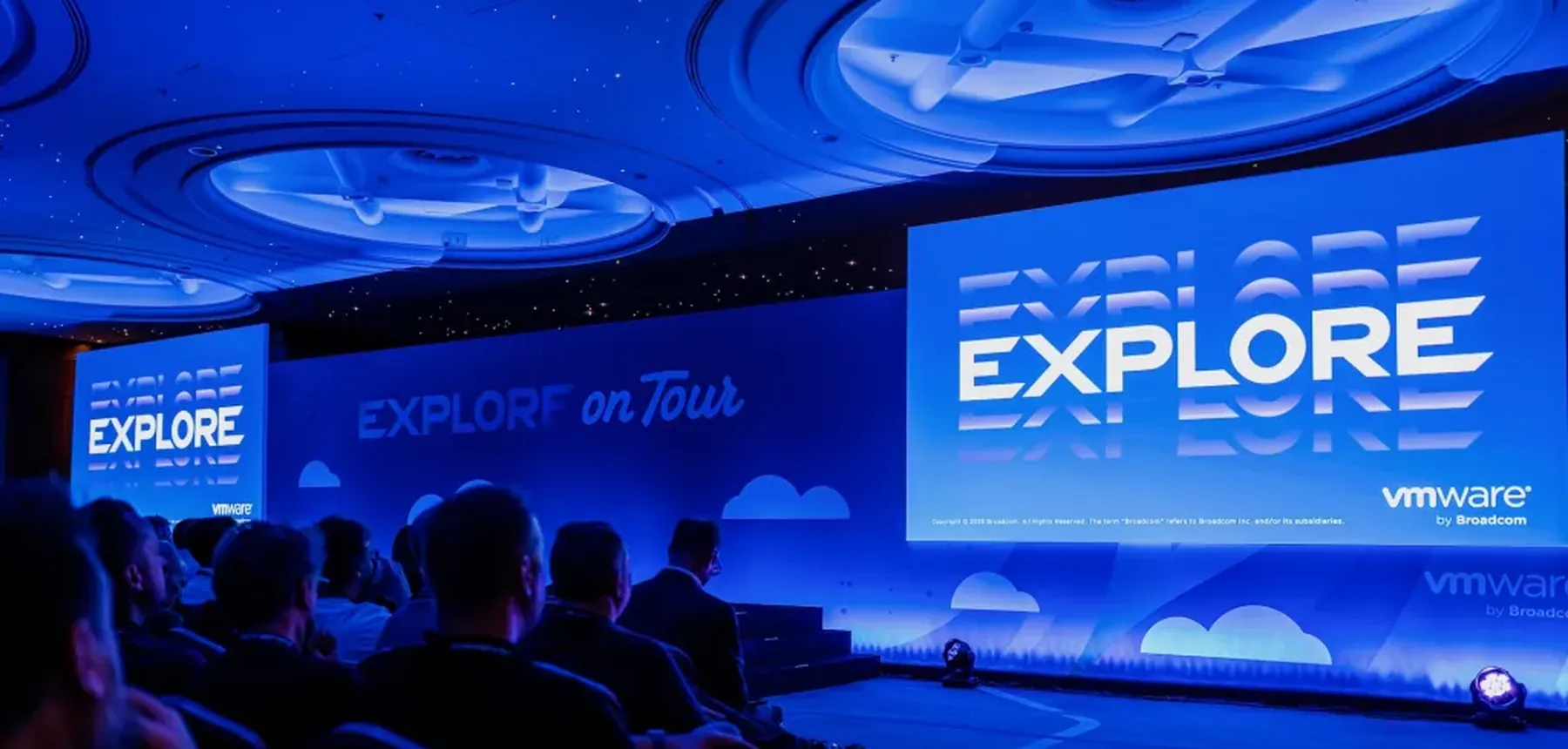
At VMware Explore in Las Vegas on 31 August, Broadcom announced VMware AI Factory — the software-defined foundation of VMware Private AI Cloud. The pitch is that the journey from bare metal to a served model drops from weeks to hours, with automated hardware provisioning, software stack enablement, and end-to-end lifecycle management.
Paul Turner, chief product officer for the VCF division, framed the problem plainly: enterprises want to run AI where their data lives, and the path from metal to model is slow, complex, and expensive. That is an accurate description of why so many private AI projects stall.
What was actually announced
- Infrastructure automation covering provisioning, stack enablement, and lifecycle — the weeks-to-hours claim
- Validated AI models for VCF, giving a production-ready path to running vetted models on-premises as a service
- Multi-tenant model sharing, so lines of business share models through isolated namespaces rather than each deploying their own copy and burning GPU allocation
- Tokenomics controls — token monitoring, GPU and vGPU tracking, and an AI metrics observability dashboard
- Heterogeneous hardware support across GPUs, CPUs, and accelerators from multiple vendors, with OEM and ODM server choice
- Cost levers in VCF 9, including NVMe memory tiering and cluster-wide storage deduplication
The part worth paying attention to
Not the automation. The tokenomics.
Broadcom named the three real cost drivers of enterprise AI — hardware CapEx, operational complexity, and token economics — and only the third is genuinely new territory for most infrastructure teams. Organisations have spent two years discovering that an AI feature which looked cheap in a prototype becomes a line item nobody forecast once it is in front of real users.
Multi-tenant model sharing is the most quietly practical thing in this announcement. Redundant model deployments wasting GPU allocation is not a hypothetical — it is what happens when three teams each stand up their own copy because nobody owned the question.
Who this is built for
Let us be straight about it: this is enterprise infrastructure for organisations with data they cannot send to a public API, GPUs to amortise, and an infrastructure team to run VCF. If that is you, AI Factory is a serious answer to a real problem, and the automation claim deserves evaluation on your own workloads.
If it is not you, the announcement is still useful — as a description of the problems you will hit at a smaller scale, and rather sooner than you expect.
Where South Bay Coders fits
We sit on both sides of this. Our team carries enterprise virtualization and NetApp storage background alongside the application work, which means we are unusually comfortable moving between an infrastructure conversation and a product one — and most AI projects fail somewhere in the gap between them.
The advice we actually give
Most mid-market organisations do not need a private AI cloud. They need a clear view of what their AI feature will cost per transaction, an architecture where the model layer can be swapped without a rewrite, and a product people will use. That is a smaller project than AI Factory contemplates, and it is the right first step for the large majority of the businesses we work with.
For clients running VMware estates where data residency or contractual obligations rule out public inference, the calculus is different — and this announcement materially improves their options. We are already modelling what it means for two of them.
Either way, the question is the same one we ask at the start of any engagement: what does the application actually need? Answer that first and the infrastructure decision usually makes itself.